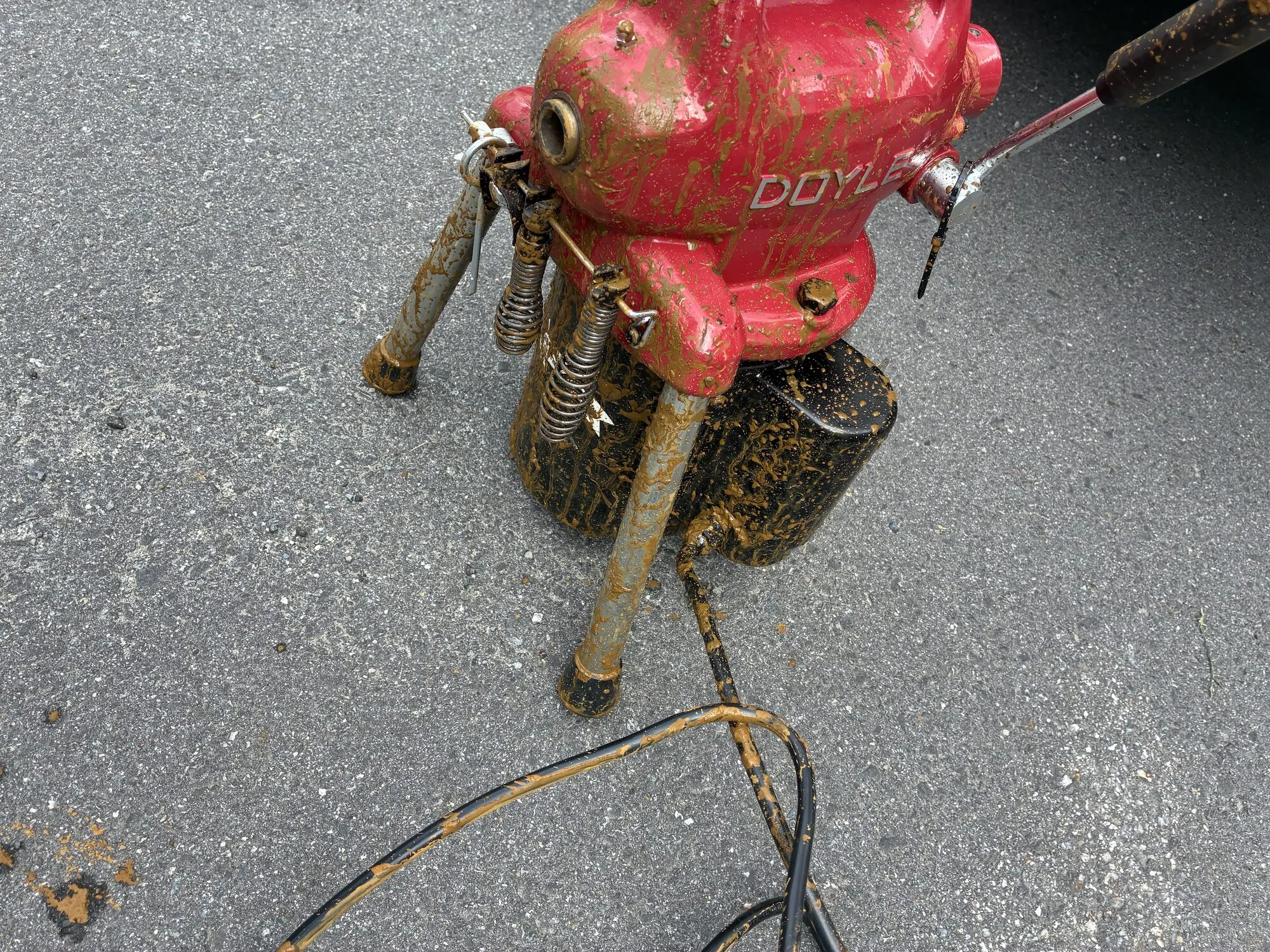
Excavation & Drain Repair in Central Vermont
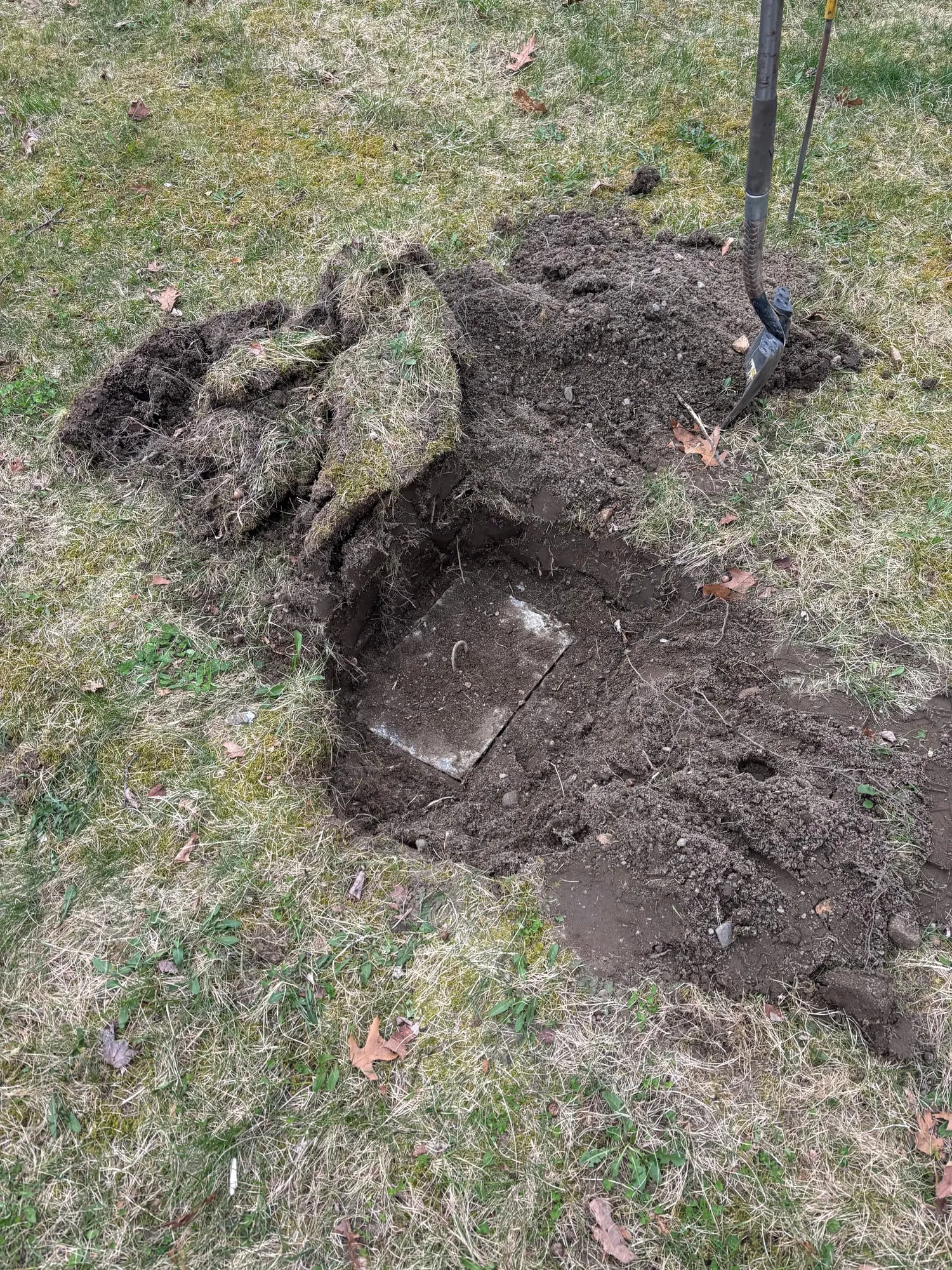
Outside Drain Repair and Replacement
Outside drain repair is where the job goes once a line is past clearing. A pipe that has collapsed, bellied badly enough to hold water year-round, or been crushed by a vehicle or frost will not be fixed by a cable, and clearing it again every few months is money spent putting off the repair. Clay tile from the early 1900s and Orangeburg pipe from the postwar decades are the usual suspects on older Barre and Montpelier properties.
When it comes to that, the camera goes down first and the fault gets located and marked above ground before any digging starts. Roof, yard and footing drains that have silted up or been crushed get the same treatment.
Vermont ground makes this its own kind of job. Frost goes deep, ledge sits closer to the surface than anyone would like, and the spring melt finds every weakness in a line. John has spent twenty-five years digging in it around Barre and the rest of Washington County.
Call or Text Us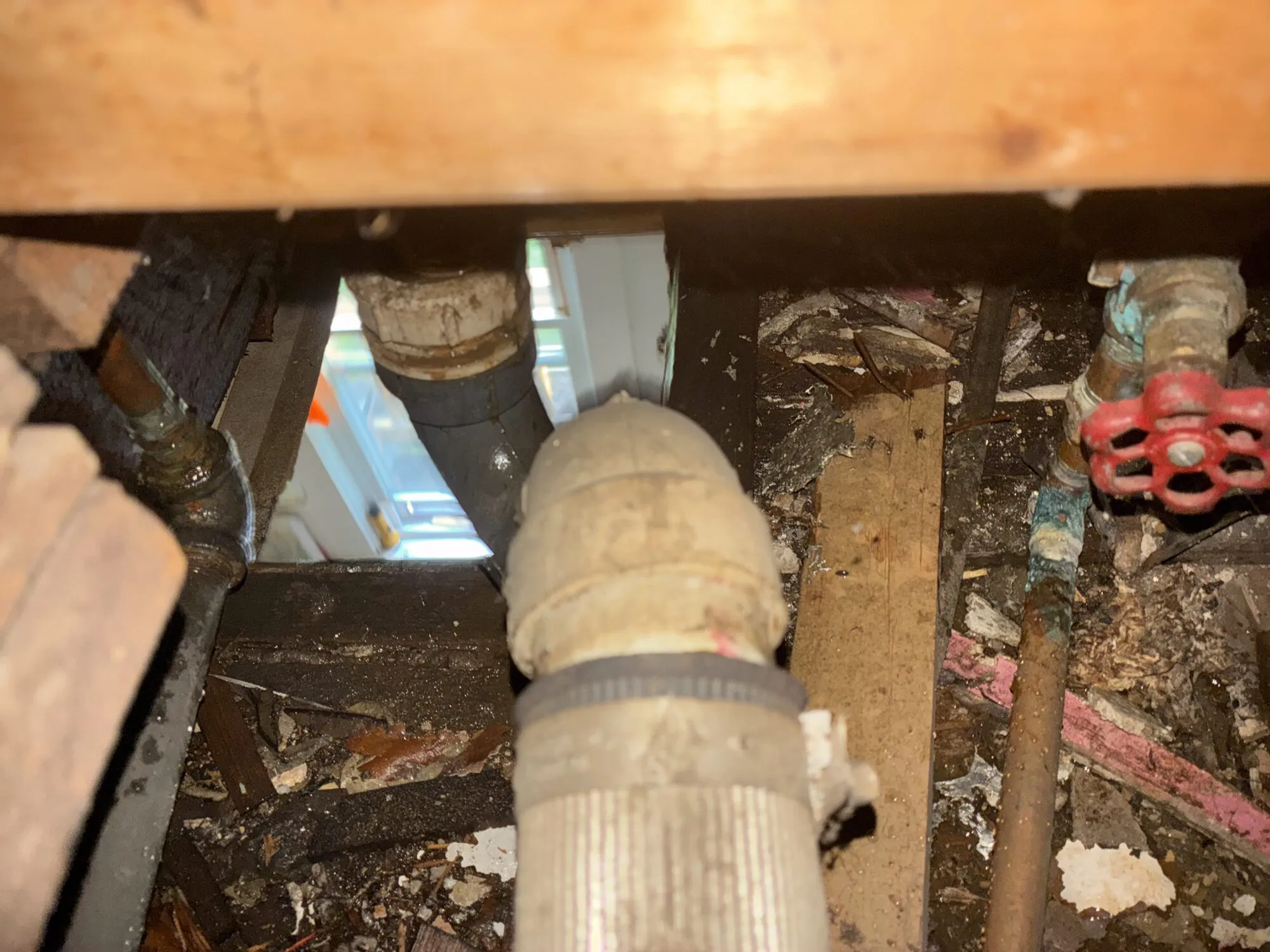
When Clearing Has Stopped Being the Answer
There is a point where cabling a line again is just paying to put off the repair. These are the signs you have reached it.
Worth a call if you have
- The same line has blocked three or more times in a year
- A camera has shown a collapse, a crack or a bad offset
- A section that bellies and holds standing water year-round
- Roots returning within months of being cut back
- A line crushed by vehicle traffic or frost heave
- Yard or footing drains that have silted up solid
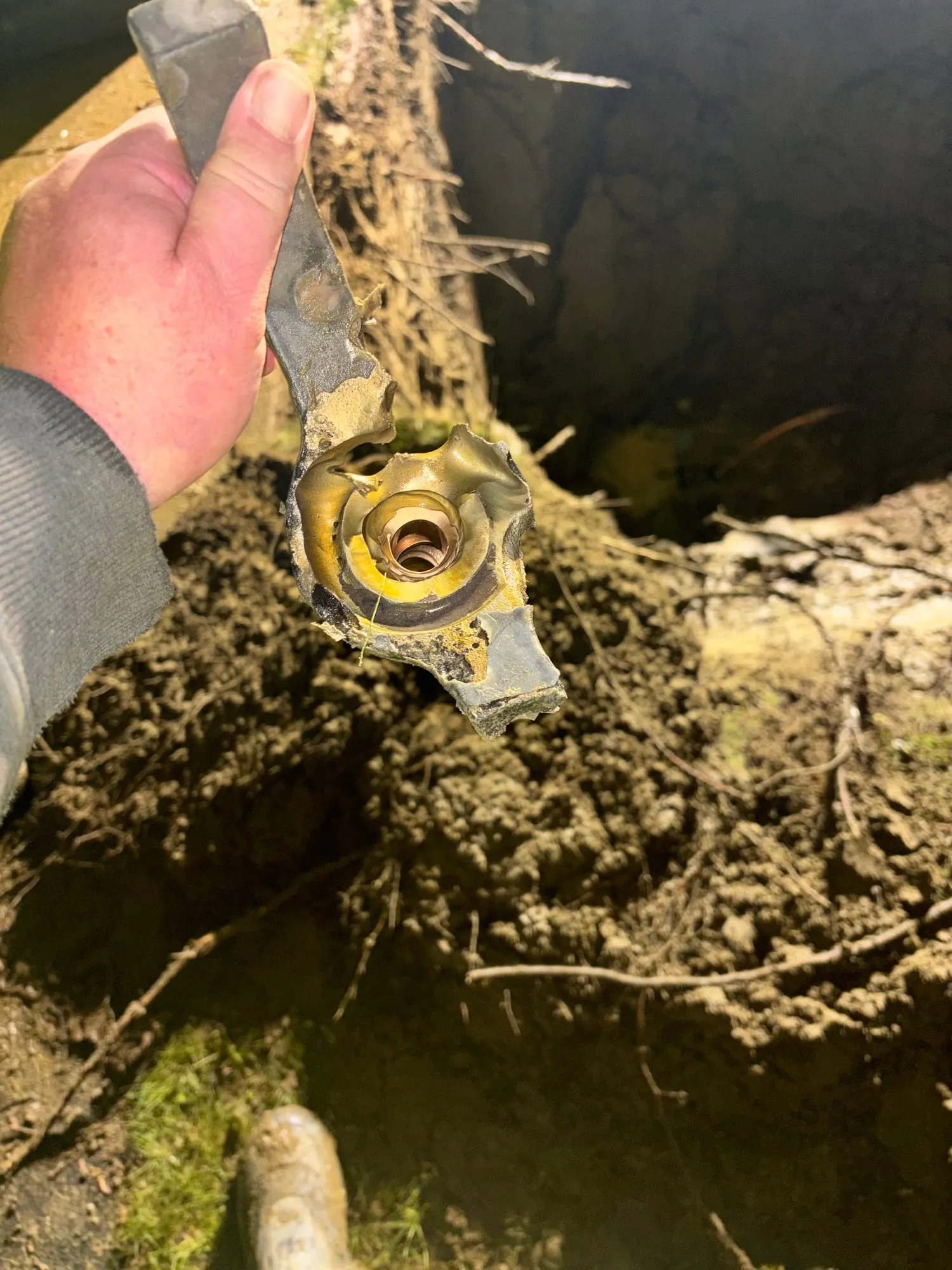
Locate First, Then Dig Once
Nothing comes out of the ground until we know where the fault is. The camera goes down, the sonde gets traced from the surface, and the spot is marked with the depth noted before a shovel appears. One hole in the right place beats a trench dug in hope.
Most failures are at a single point, a joint, a crushed section, a root intrusion, so that section is what gets replaced. Spot repair versus full-length replacement is the choice on most jobs, and full replacement is the exception rather than the starting point.
The ground here sets some of the terms. Frost goes deep, ledge often sits shallow, and the spring melt finds any weakness a line has. Knowing how those behave is a large part of judging what is under a driveway before it is opened up.
Call or Text Us
What Drives the Price
Depth, access and what is on top of it. A line three feet down in open lawn is one job. The same fault under a paved driveway or up against a foundation is another one entirely, and most of the difference is putting the surface back afterward rather than the pipe itself. Ledge changes it again, because rock has to be broken rather than dug.
That is why locating comes first. Knowing the fault is at eleven feet rather than somewhere along ninety feet of run changes the quote enormously, and the locate is a small cost against a trench.
You get the number before we start. If the ground turns out different from what the locate suggested, we stop and tell you before the cost changes.
Get a Real NumberExcavation & Drain Repair Across Central Vermont
John works out of Barre and these are the towns he is in most often. Somewhere else in Washington County? Call and ask. Photographs from real jobs are in the recent work gallery.
Questions About Excavation & Drain Repair
How do you know where to dig?
We locate the fault with a camera and a locator before anything comes out of the ground, and mark it on the surface with the depth. One hole in the right place beats a trench.
Can a line be repaired without digging the whole run?
Usually. Most failures are at a single point, a joint, a crushed section, a root intrusion, and that section is what needs replacing. Full replacement is the exception.
How deep are sewer lines in Vermont?
Deep enough to sit below frost, which in central Vermont usually means four feet or more, and deeper on a long run out to a tank or a main. That depth is most of why a spot repair is priced by the hole rather than by the length of pipe.
Can you repair a line under a driveway or against a foundation?
Yes, and that is where locating pays for itself most. The camera and sonde put the fault to within a foot or two, so the cut in the pavement or the dig along the foundation is as small as it can be. Putting the surface back is most of the cost, so the size of the hole matters more than the pipe.
What is Orangeburg pipe, and should it be replaced?
A tar-impregnated fiber pipe used from the 1940s into the 1970s. It softens and deforms with age, so a camera often finds it flattened or collapsed. If the camera shows Orangeburg on your lateral, plan on replacing it. Clearing it buys months, not years.
How long does an outside drain repair take?
A spot repair in open lawn is usually a day. Under pavement, against a foundation, or in ledge it runs longer, and the locate beforehand is what lets us say which before we start.
What Else We Get Called For
Every one of these is the same pair of hands, from the phone call to the last look at the line.
Drain Cleaning
Sinks, tubs, toilets and main lines. Augering and clearing plugged drains is the bulk of what we do, in homes and in commercial kitchens.
Learn MoreHydro Jetting
High-pressure water for grease, roots and buildup an auger will not shift. Jet pre-treatment certified.
Learn MoreCamera Inspection & Locating
See the problem before anyone digs. We put a camera down the line and mark on the surface exactly where the trouble is.
Learn MorePump Station Repair, Maintenance & Replacement
Repair, maintenance and replacement for sewage pump stations, lift stations and grinder pumps, including the floats, alarms and force main.
Learn MoreMinor Plumbing Repairs
The small repairs that show up once a drain is open: traps, couplings, a length of line that has given out.
Learn MoreSump Pump Repair
Pumps that quit, run nonstop, or cannot keep up with the spring melt, plus the float and the line they discharge into.
Learn MoreGrease Trap Cleaning
Trap pumping on a schedule for restaurants and commercial kitchens, with the grease line jetted on the same visit.
Learn MoreClogged Toilet Repair
Toilets a plunger will not fix: pulled, cleared and reset, including the ones that have never flushed right.
Learn MoreFrozen Line Thawing
Frozen water service lines and frozen drain, sewer and septic lines thawed and checked for splits, in the weeks when Vermont ground freezes deep.
Learn MoreGarbage Disposal Repair
Disposals that hum, jam, leak or back up into the other basin. Repaired where it makes sense, replaced where it does not.
Learn MoreMain Sewer Line Clog
When every drain in the house backs up at once, the blockage is in the main line, and that is a different job from a slow sink.
Learn More
Tell us what it’s doing. We’ll tell you what it is.
Weekdays 8 to 4, and the same number reaches John after hours and on weekends. Call or text and describe what is happening.
Call (802) 497-7556